Protect Your Assets From Lawsuits in 90 Days. With Direct Help From Douglass Lodmell, With Zero Disruptions To Your Day-To-Day Life.
No offshore complexity. No loss of control. Just a structure that works when you need it.
AS SEEN ON


The Bridge Trust®
Domestic ease. Foreign strength. The best of both worlds.
The Core Innovation
The Bridge Trust gives you complete control and simplicity in normal times, then instantly activates fortress-level protection when a creditor comes after you. You get domestic ease 99% of the time, and foreign strength exactly when you need it.
Normal Times
(Domestic Mode)
Day-to-day operations stay completely simple. You maintain full control with none of the complexity.
- You serve as trustee
- Normal U.S. banking
- Domestic tax reporting (1040)
- No foreign compliance
- Complete control & access
Under Attack
(Protection Mode)
The moment a creditor threatens, the trust flips foreign and activates Cook Islands protection.
- Foreign trustee takes over
- Beyond reasonable doubt standard
- No contingency fee attorneys
- Loser pays all legal fees
- Assets legally unreachable
Transparent & Lawful
Fully disclosed, IRS compliant, nothing hidden. Protection through architecture, not secrecy.
Instant Activation
Switches to protection mode the moment a threat appears. No delays, no complex procedures.
Court-Resistant
Even if you lose in court, creditors can't reach assets. Protection that works after judgment.
How The Bridge Trust Works
Step 1: Analyze
Exposure review, entity/title audit, and placement guidance for AMLP and LLCs. Clear map of what's exposed vs. insulated, and what's fixable now vs. later. (Plan mechanics per Bridge Trust + AMLP framework.)
Step 2: Design and Implement
Install the Bridge Trust® and Asset Management LP, align with existing LLCs, and document a funding plan. All docs are attorney-prepared; tax/admin stays domestic in calm times.
Step 3: Operate (Ongoing)
Normal operations remain domestic: current U.S. banking is fine; client may serve as trustee; no foreign reporting in calm times. If a legitimate Event of Duress occurs, the Protector can appoint an offshore successor trustee and foreignize administration/situs, forcing creditors into a far more difficult forum.
Trusted by over 10k+ operators.
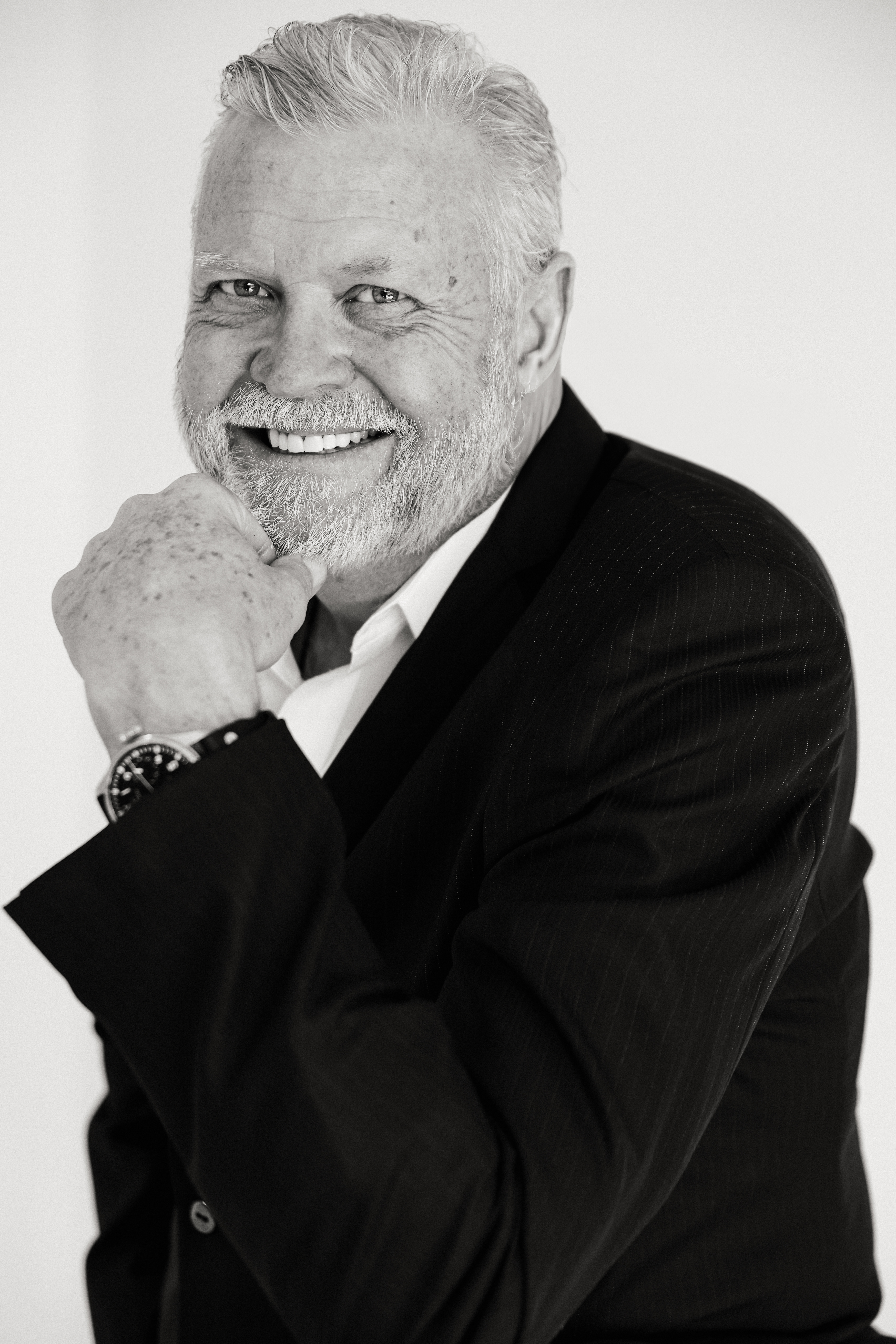
Douglass Lodmell Asset-protection attorney · JD Cardozo · LL.M. Tax (NYU) · Judicial clerkship (E.D.N.Y.) · CLE instructor · Speaker to physician groups, syndicators, YPO
What Industry Leaders Say About
Douglass Lodmell
Tom
Wheelwright
"When clients ask me how to turn defense into collection-proof structure, I send them to Doug. Transparent, lawful, and court-resistant, the way serious builders protect what they've built."

What Our Clients Say

"I've known Doug in many contexts, as a friend, as a client and as a business partner and he impresses me on all levels. He's dependable, smart, generous and I wouldn't hesitate recommending him and his law firm to anyone. He's the best and most ethical lawyers providing asset protection with rock solid strategies to give you peace of mind about your wealth."

"Straight forward, and straight talk. Doug is exactly the lawyer I want on my side. If I send someone to Doug, I know they'll thank me for it!"

"Doug is one of the most powerful thinkers I have came across. He has a simplistic yet effective and accurate way to analyze anything you bring to his attention. Besides being extremely bright, he is a genuine and caring individual which is why I feel fortunate to know him."
Average Business Owner Faces First Lawsuit In:
Why I Do What I Do
I grew up watching something most people never see.
My father was a real estate syndicator in Arizona during the 1980s. He structured limited partnerships where he served as the general partner, and investors came in as limited partners.
Then the Savings & Loan crisis hit.
Suddenly, his investors had a problem that had nothing to do with the real estate itself.
Their own creditors banks that had loaned them money were coming after the funds they'd invested in my father's partnerships.
But here's what happened:
Because of how the limited partnerships were structured, the creditors couldn't touch the money.
The general partner controlled distributions. The investors weren't getting cash payouts. And without distributions, there was nothing for the creditors to seize.
My father helped those investors settle with their banks without ever having to liquidate their positions.
That was the first time I understood something most people never learn: Legal structure can make assets unreachable, even when someone has a legal right to come after you.
Not because you're hiding anything.
But because the architecture itself creates separation that creditors simply cannot penetrate.
I was watching asset protection work in real time, before anyone even called it that.
When Everything Changed
Around 1986, something happened halfway across the world that would change everything.
The Cook Islands passed what's now known as the 1984 Trust Act.
An attorney had approached their government with a proposal: create trust laws that intentionally favor debtors over creditors.
And they did it.
They built the most protective trust statute in the world:
- Plaintiffs had to prove their case beyond a reasonable doubt (the murder standard, not the civil standard)
- No contingency fee attorneys allowed
- Loser pays all legal fees and costs
Think about what that means for a creditor trying to reach assets in a Cook Islands trust.
They have to hire an attorney on the islands. Pay by the hour. Risk losing and paying your legal fees too. And they have to meet a criminal burden of proof to win.
It's not impossible.
But it's designed to be so difficult that most creditors won't even try.
What I Learned Inside the System
After law school, I did something that changed how I see the legal system forever.
I clerked for Judge Jack Weinstein in the Eastern District of New York.
Most people think judges are neutral arbiters who follow the law and let it lead them to a conclusion.
What I saw behind the scenes was different.
Judges are human. They decide what outcome they want, and then they ask their clerks to rationalize it.
Not every time. But often enough that it fundamentally changed how I think about litigation.
If you get in front of a judge, you have no idea what's going to happen.
The goal of asset protection isn't to win in court. It's to make sure that even when you lose, the creditor still can't reach what matters.
Because at the end of the day, a judgment is just a piece of paper.
What matters is whether the creditor can collect.
And if your structure is designed correctly, they can't, no matter what the judge decides.
The Bridge Trust
By the late 1990s, my father and I had built a successful practice using offshore trusts.
But we kept running into the same problem:
Pure foreign trusts worked, but they were complex to sell and maintain.
Foreign trustees. Foreign compliance. Foreign banking relationships. Higher costs.
Clients wanted the protection, but they didn't want to give up control or deal with the operational headaches.
So I asked a different question:
What if we could get the benefits of a foreign trust without actually being foreign all the time?
That's when I invented what we now call the Bridge Trust.
The trust is registered offshore from day one. But for IRS purposes, we treat it as domestic. That means simplified tax reporting, domestic banking, no foreign compliance requirements.
The client serves as the trustee. They maintain full control. Our firm serves as the Protector.
If there's ever a lawsuit, a judgment, or any serious threat, we declare an "event of duress."
The moment that happens, the trust flips fully foreign. All those Cook Islands protections activate instantly.
The creditor now has to deal with a fully foreign trust that's nearly impossible to penetrate.
But until that moment arrives, the client operates with complete simplicity and control.
Domestic ease. Foreign strength.
We called it the International Wealth Management Trust at first.
Now it's just known as the Bridge Trust.
Protect, Don't Hide
I've spent 30 years doing this work.
And the one thing I tell every client is the same thing I'm telling you:
This is not about hiding assets.
Hiding implies you're doing something wrong.
We're not.
The structure is completely transparent. It's disclosed. It's compliant with every tax law and reporting requirement.
A creditor can see exactly where the assets are.
They just can't get to them.
That's the difference between protection and secrecy. Protection works even when everything is visible. Because the strength isn't in hiding. It's in the architecture.
Courts are unpredictable. Judges can rule however they want. The legal system doesn't exist to protect you anymore.
But if you've designed your structure correctly, none of that matters.
The judge can rule against you.
The creditor can win on paper.
And your core assets still remain intact.
Because you removed them from the reach of the court before the fight ever started.
Who This Is For
Business owners, real estate operators, and high-earning professionals with 7-figure exposure who want:
- Lawful transparency (no secrecy, no games)
- Hardened posture under pressure (domestic control, foreign strength when it matters)
- Protection that works after the judgment, not just during the lawsuit
Who This Is Not For
- People in active evasion or looking for "loopholes"
- Anyone unwilling to follow funding and maintenance (documents must match behavior)
- Anyone under $1M net worth (not cost-effective yet)
- Anyone already in an active lawsuit (timing matters, we'll tell you what's still possible)
The Problem
Most asset protection plans assume you'll win in court. But judges are unpredictable, and when you lose, your equity, accounts, and cash flow are wide open to collection.
The Solution
The Bridge Trust + Asset Management LP assumes the worst-case ruling and keeps your assets safe anyway. Transparent, lawful, and designed for the collection phase, not just the courtroom.
Deliverables You'll Receive
Domestic Holding Entity (AMLP) Setup & Alignment
Centralizes liquid assets. Integrates with existing LLCs. Day-to-day control stays with you. Taxed as a pass-through entity, it remains fully U.S.-reporting and CPA-visible.
Funding & Maintenance Guidance
Step-by-step instructions so your behavior matches your documents. What to move. When to move it. How to keep it clean. Includes annual entity check-up and CPA coordination guidelines.
Bridge Trust® Setup
Hybrid design, registered offshore, administered domestically in normal times. Transparent. Lawful. proven and implemented for over 20 years.
Under-Heat Protocol
Defines roles and steps if an Event of Duress occurs, who authorizes, what administrative shifts take place, and how control transitions offshore.
Placement Guidance (AMLP vs. LLCs)
Where each asset belongs in the stack. Safe vs. risky. How they interact without creating exposure. Includes written placement memo summarizing entity's purpose and asset flow.
Investment presented on your analysis.
FAQs
"Is 'offshore' a red flag?"
Normal operation remains domestic and fully transparent. Offshore jurisdiction is a contingency layer that activates only upon a defined Event of Duress. It’s not secrecy, it’s legal engineering.
"Will I lose control?"
During normal periods, you remain managing trustee and signatory. Only upon a verified duress event can the independent Protector appoint an offshore successor trustee.
"Why not just more insurance?"
Insurance is defense. It handles Stage 1 (the complaint). But if the judgment exceeds your policy or hits an exclusion, you're personally exposed at Stage 3 (collection). That's the gap. Structure closes it.
"What if I'm already in a dispute?"
Timing matters. Fraudulent transfer laws restrict what you can do once a dispute starts. We’ll identify what restructuring is still legally permissible and coordinate with your existing counsel as needed.
"How is this different from a domestic trust?"
The Bridge Trust is registered in a foreign jurisdiction that does not recognize or enforce U.S. civil judgments and requires a higher burden of proof for creditors. They must re-litigate their claim under local law, most stop there.
This is educational only. Not legal advice.
We provide formation + guidance with clear service-level commitments, no 100% outcome guarantees.
Courts are unpredictable. My job isn't to help you hide assets. It's to help you design so that even if a ruling goes against you, your assets stay safe.
Transparent. Visible. Yours.
You can see the assets. You just can't take them.